



Para leer en español,” haz clic aquí.

Rancho Los Cerritos Collections Manager Magda Cervantes and Education Coordinator Alana Reese.
Throughout Seeds of Resilience: Barrio Americano, women emerge not only as subjects of history but as its keepers. Women carry cultural traditions, shape family life, and sustain community across generations. This throughline is deeply intentional, shaped by the vision and care of two women who brought the exhibition to life.
Education Coordinator Alana Reese and Collections Manager Magda Cervantes approached this exhibition with a shared goal: to expand how we understand American history and to center the lived experiences of Mexican and Mexican American communities whose roots in this region span over 250 years. Together, they envisioned something immersive and grounded in everyday life.
“Our approach with this exhibition was to immerse visitors within the barrio,” Cervantes said. “We wanted to move away from the traditional museum displays of texts paired with artifacts. Instead, we wanted to create an intimate space that brings visitors into the barrio and allows them to get a feel for the sights and flavors of Mexican and Mexican American culture.”
That intentionality is visible in every detail. From the exhibit’s visual identity, featuring a nopal cactus and sun rooted in cultural symbolism, to the physical design of the space, the exhibition invites visitors into lived experiences. Text appears on cloth and recreated newspapers, while a mercado display includes dried chiles and produce evokes memory and place.
Just as important, Alana Reese and Magda Cervantes worked alongside the community. Local historians, educators, and residents helped shape the exhibit’s name, refine its text, and inform future programming. This collaborative approach reflects a deeper value: history is strongest when it is shaped by those who live it.
“I would like for people to have a broader understanding of what American history is,” Cervantes shared. “So many times, communities of color and immigrant communities are left out of that larger narrative. I would like to see a renewed sense of belonging. We are a part of that history and we are a part of the nation’s future.”
Hear directly from the curators on YouTube to learn more about Alana and Magda’s process and vision for the exhibition.
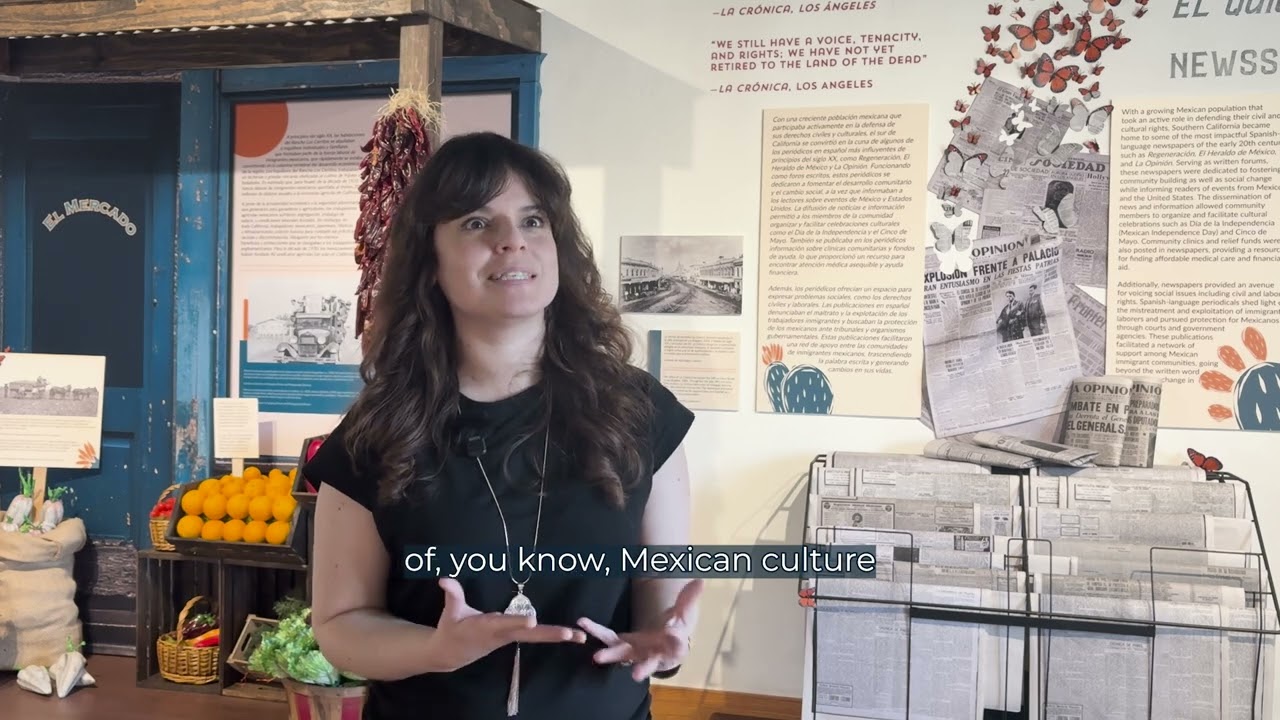
This perspective becomes especially powerful when the exhibition challenges dominant historical narratives. As Reese reflects, “So often when we learn about the thirties, it’s centered on the Great Depression. But what were the experiences beyond the Depression? What other things were happening to people who were living here at that time?”
One of the most moving answers comes through the voice of Hortencia Nieto.
Oral History: Hortencia Nieto

Inside the exhibition, visitors are invited to pick up a vintage telephone. On the other end is Hortencia Nieto’s voice, offering a deeply personal account of a history too often overlooked.
Her story centers on what is commonly referred to as “repatriation,” a term that suggests voluntary return but obscures a far more troubling truth. During the 1930s, widespread anti-Mexican sentiment led to the forced removal of more than one million people of Mexican descent from the United States. Over 60 percent were U.S. citizens.
Hortencia was one of them.
In 1932, at just two years old, she and her family were expelled from the United States and left in the interior of Mexico in the middle of the night. She would not return until 1944. Decades later, as a resident of Long Beach, she shared her story in an interview conducted by her son, longtime Rancho Los Cerritos volunteer Richard Nieto.
Hortencia’s voice collapses the distance between past and present. History is lived, remembered, and carried forward.
“The more we can learn about what has happened in the past,” Reese noted, “it helps us to better understand the present and to build a better future for everyone.”
El Hogar: Women at the Center of the Home

Mexican women were courageous and enterprising in finding ways to support their families. Ramona Rosales, pictured here, ran a boarding house at Rancho Los Cerritos to help with the household income, ca 1917. Courtesy of Rancho Los Cerritos Photo Collection.
As the exhibition brings us into the barrio, it is within el hogar, the home, where we unpack the central role of women in sustaining it.
“El hogar was a vital space within the barrio and Mexican community,” the exhibit notes. “Here, homelife and family recharged the indomitable spirit of Mexicanos… rooted in the joy, vibrancy, and resilience of familial ties and Mexican culture.”
At the heart of this space were women. With resourcefulness and determination, Mexican women sustained their families and communities despite limited resources and systemic barriers. They passed down knowledge of food, medicine, economics, and cultural traditions, preparing the next generation to carry forward a sense of identity and belonging.
Carrying These Seeds Forward

Seeds of Resilience: Barrio Americano invites us to reconsider what defines American history. It asks us to listen more closely and recognize the everyday spaces and voices that have long shaped our communities.
This Women’s History Month, we invite you to reflect on the women who have shaped your own life.
Inside the exhibition, the Community Tree offers a space to share those stories. Who are the women whose strength, care, and wisdom have guided you? What lessons can we carry forward?
As these stories grow, so too does our collective understanding of history.
“Exhibits like this allow the opportunity to learn more about each other, and better ways to connect, support, empower, and bring our community together; and that means all of us.”
— Councilwoman Megan Kerr

From left: Councilwoman Megan Kerr, RLC Executive Director Alison Bruesehoff, Magda Cervantes, and Alana Reese at the opening of Seeds of Resilience: Barrio Americano, where Kerr’s office presented a certificate of recognition.